


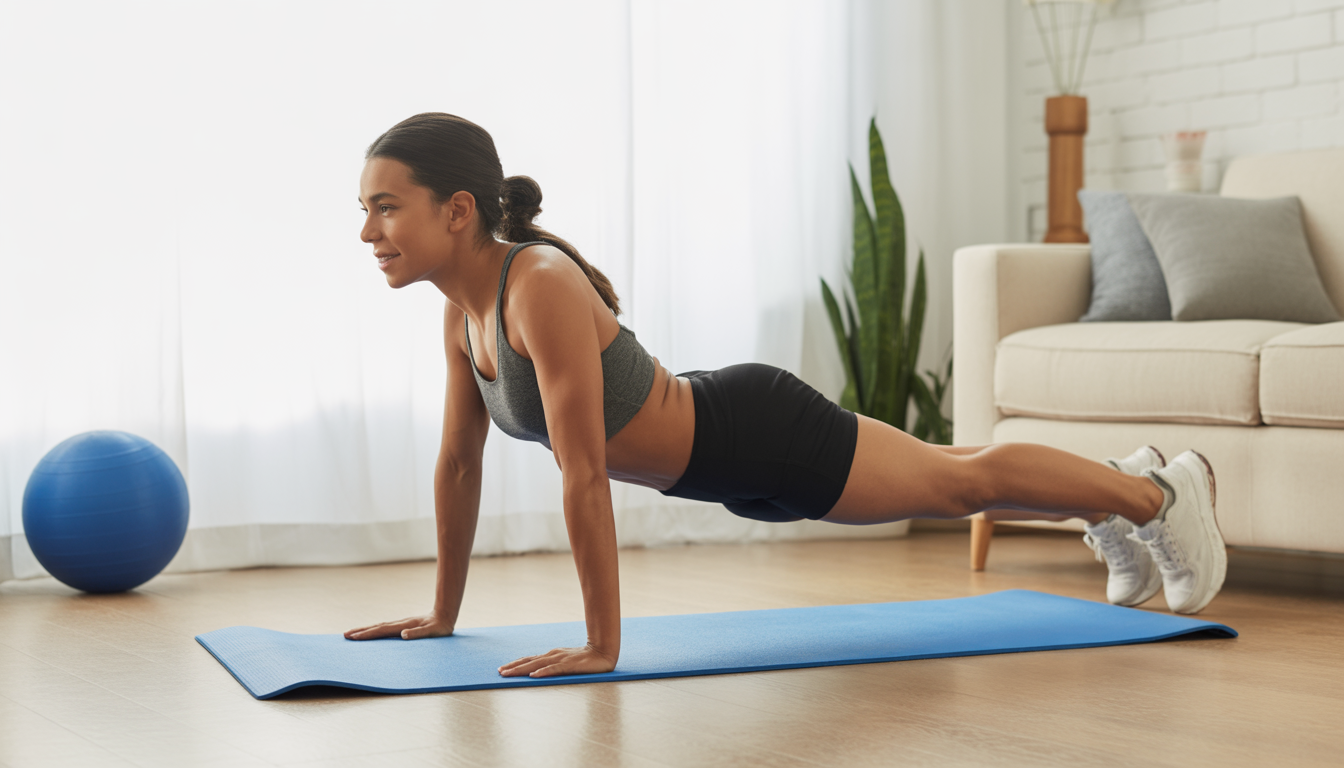
You don’t need a gym-or even equipment-to get in great shape. With the right mix of bodyweight exercises, you can build strength, improve endurance, and boost overall fitness right from your home.
This guide gives you 30 effective moves, organized by level, so you can start where you are and progress at your own pace.
Why At-Home Workouts Work
Bodyweight training is powerful because it:
- Builds strength and muscle using your own body resistance
- Improves cardio fitness and endurance
- Helps manage body fat and weight
- Requires zero equipment and minimal space
Consistency matters more than location. A small space can deliver big results.
Beginner Routine (Full-Body Foundation)
Structure:
- 2 sets per exercise
- 10–15 reps each
- 30–60 seconds rest
- Total time: ~15–20 minutes
1. Glute Bridge
Strengthens your core and glutes.
2. Chair Squat
Improves lower body strength and form.
3. Knee Push-Up
Builds upper-body strength gradually.
4. Stationary Lunge
Targets quads, hamstrings, and glutes.
5. Plank to Downward Dog
Engages shoulders and core.
6. Donkey Kicks
Isolates glute muscles effectively.
7. Bird Dog
Improves balance and coordination.
8. Forearm Plank
Builds full-body stability.
9. Side-Lying Hip Abduction
Strengthens hip muscles.
10. Bicycle Crunch
Targets abdominal muscles.
Intermediate Routine (Build Strength & Control)
Structure Options:
- 2 sets of 10–15 reps
OR - Timed circuit (1 minute each exercise)
11. Bridged March
Adds balance challenge to glute work.
12. Bodyweight Squat
Deeper, more controlled squat.
13. Standard Push-Up
Full upper-body engagement.
14. Forward & Backward Lunges
Improves mobility and balance.
15. Pike Push-Ups
Targets shoulders intensely.
16. Kneeling Squat
Increases time under tension.
17. Superman
Strengthens lower back.
18. Plank with Leg Lift
Boosts core activation.
19. Side Plank with Hip Abduction
Full-body stability + hip strength.
20. Dead Bug
Improves deep core control.
Advanced Routine (Power & Performance)
Structure:
- 2 sets of 10–15 reps
- 30–60 seconds rest
21. Single-Leg Bridge
Increases glute activation and balance.
22. Overhead Squat
Challenges mobility and core stability.
23. One-Leg Push-Up
Advanced upper-body strength.
24. Jumping Lunges
Explosive lower-body power.
25. Elevated Pike Push-Ups
Intense shoulder workout.
26. Kneeling Squat with Jump
Combines strength and explosiveness.
27. Advanced Bird Dog
Core + coordination under load.
28. One-Leg Plank Hold
Maximizes core engagement.
29. Side Plank (Full) with Leg Lift
Total-body stabilization challenge.
30. Hollow Hold to Jackknife
Advanced core strength and control.
How to Progress Safely
- Start at your current fitness level
- Focus on proper form over speed
- Increase reps or difficulty gradually
- Train 3–5 times per week
Progression = consistency + small improvements.
Are 20-Minute Home Workouts Enough?
Yes-if done consistently.
However, for optimal health:
- Aim for 150 minutes of moderate activity weekly
- Or 75 minutes of intense activity
Short workouts work best when paired with regular movement.
Do Home Workouts Really Build Muscle?
Absolutely.
Bodyweight exercises can:
- Build strength
- Improve endurance
- Increase muscle tone
Advanced variations (like single-leg or explosive moves) increase intensity significantly.
Can You Lose Belly Fat with These Exercises?
You can’t target fat loss in one area, but:
- Full-body workouts + calorie control = fat loss
- Core exercises strengthen muscles underneath
Combine exercise with proper nutrition for best results.
Final Takeaway
At-home workouts are one of the most accessible and effective ways to stay fit. With just your body weight, you can build strength, improve endurance, and challenge yourself at every level.
Start with the beginner routine, stay consistent, and gradually progress. In a few months, you’ll be surprised at how far you’ve come.
FAQs
Do I need equipment for home workouts?
No. Bodyweight exercises are enough to build strength and fitness.
How often should I work out at home?
3–5 days per week is ideal for most people.
How fast will I see results?
You may feel improvements in 2–4 weeks, with visible changes in 4–8 weeks.
