


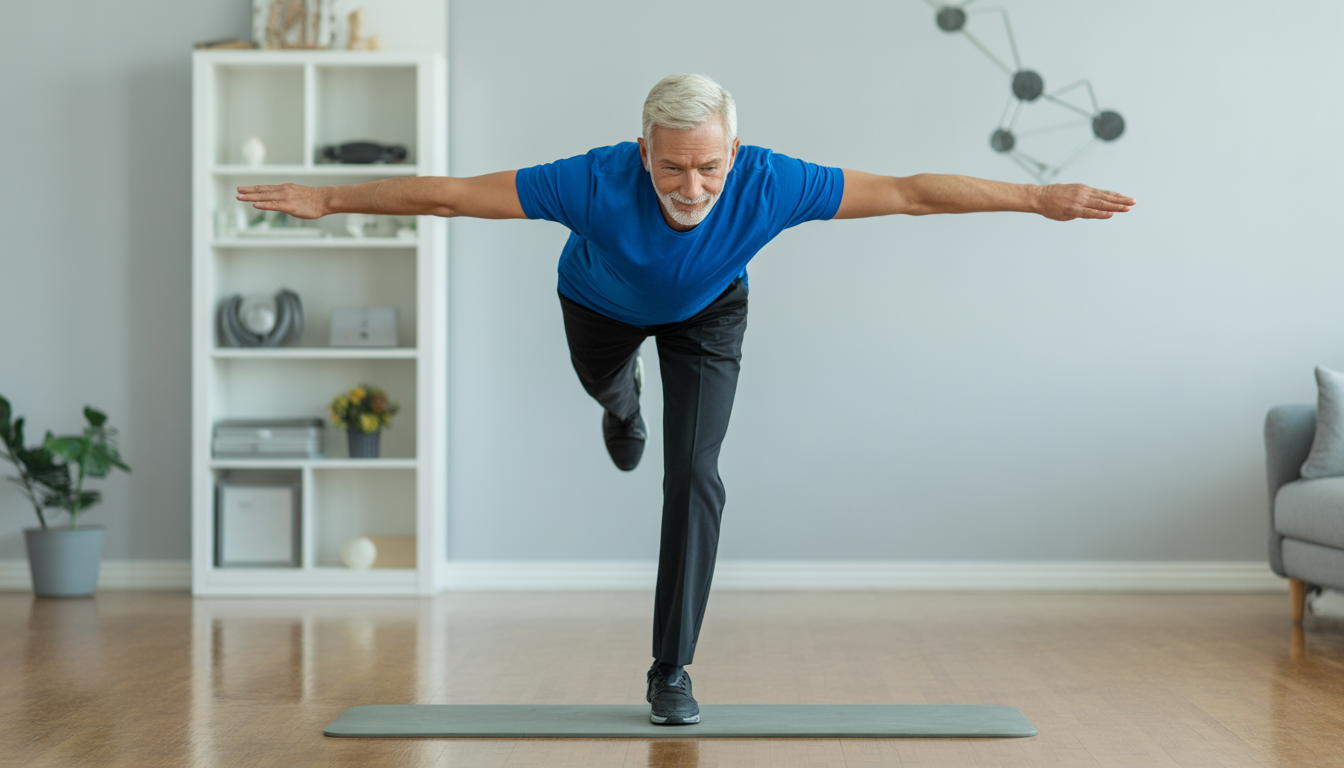
Balance is more than just staying upright-it’s a key component of strength, coordination, and overall well-being. Whether you’re an older adult aiming to prevent falls, a parent helping your child develop motor skills, or an athlete improving performance, balance training can make a noticeable difference.
The best part? Most balance exercises require little to no equipment and can be done at home.
Why Balance Training Matters
Improving balance helps you:
- Enhance coordination and stability
- Move more efficiently in daily activities
- Strengthen core and lower body muscles
- Reduce the risk of falls and injuries
- Improve body awareness (proprioception)
Balance isn’t just physical-it also strengthens your mind-to-muscle connection, helping you move with more control.
Before You Start
- Use a wall, chair, or surface for support if needed
- Start slow and focus on proper form
- Progress gradually by removing support or closing your eyes
- Train both sides equally to avoid imbalances
Balance Exercises for Older Adults
These exercises help maintain independence and reduce fall risk.
1. Tightrope Walk
Walk in a straight line, placing one foot directly in front of the other.
Tip: Keep your gaze forward and arms extended for stability.
Goal: 15 steps × 3–5 sets
2. Rock the Boat
Shift your weight onto one foot and lift the other slightly.
Tip: Hold for up to 30 seconds on each side.
Focus: Improves weight transfer and control
3. Flamingo Stand
Stand on one leg while keeping your posture upright.
Tip: Keep your spine aligned and core engaged.
Goal: 8–12 reps per side
Balance Exercises for Kids
Make balance training fun and interactive to keep kids engaged.
4. Heel-to-Toe Walk
Walk in a straight line, placing heel directly in front of toes.
Turn it into a game using chalk lines outdoors.
5. Bean Bag Balance
Balance an object on the head or shoulder while walking.
Adds posture awareness and coordination.
6. Musical Statues
Dance while music plays-freeze in a balancing pose when it stops.
Builds reflexes and body control.
Balance Exercises for Athletes
These exercises improve performance, agility, and injury prevention.
7. Banded Triplanar Toe Taps
Use a resistance band and tap your foot forward, sideways, and backward.
Targets hips, glutes, and core stability.
8. Single-Leg Cross-Body Punches
Balance on one leg while performing controlled punches.
Enhances coordination and core strength.
9. Pallof Press with Rotation
Use a resistance band or cable to resist rotation.
Strengthens the core and improves stability under movement.
Balance Exercises for Parkinson’s Disease
Balance training can support mobility and reduce fall risk.
10. Chair Leg Raises
Extend one leg at a time while seated.
Improves lower body strength safely.
11. Side Shuffle
Move laterally between two points in a controlled manner.
Enhances coordination and directional control.
Balance Exercises Using a Ball
Unstable surfaces activate deeper stabilizing muscles.
12. Stability Ball Plank
Place forearms on a ball and hold a plank position.
Strengthens core and improves control.
13. Bosu Ball Squat
Perform squats on a Bosu ball for added instability.
Increases lower body strength and balance simultaneously.
How to Add Balance Training to Your Routine
- Practice 10–15 minutes daily
- Include balance work in your warm-up or cooldown
- Combine with strength and mobility exercises
- Progress gradually by increasing difficulty
Consistency is more important than intensity.
Final Takeaway
Balance training is a simple yet powerful way to improve your strength, stability, and confidence in movement. Whether you’re preventing falls, helping your child develop coordination, or enhancing athletic performance, these exercises offer benefits for every age and fitness level.
Start small, stay consistent, and enjoy the process-because better balance leads to better movement and a healthier life.
FAQs
How often should I do balance exercises?
Aim for at least 3–5 times per week for noticeable improvements.
Are balance exercises safe for beginners?
Yes-start with support (wall or chair) and progress gradually.
Can balance training prevent falls?
Absolutely. It’s one of the most effective ways to reduce fall risk, especially in older adults.
Do I need equipment?
No. Most exercises use just your body weight, though tools like balls or bands can add challenge.
